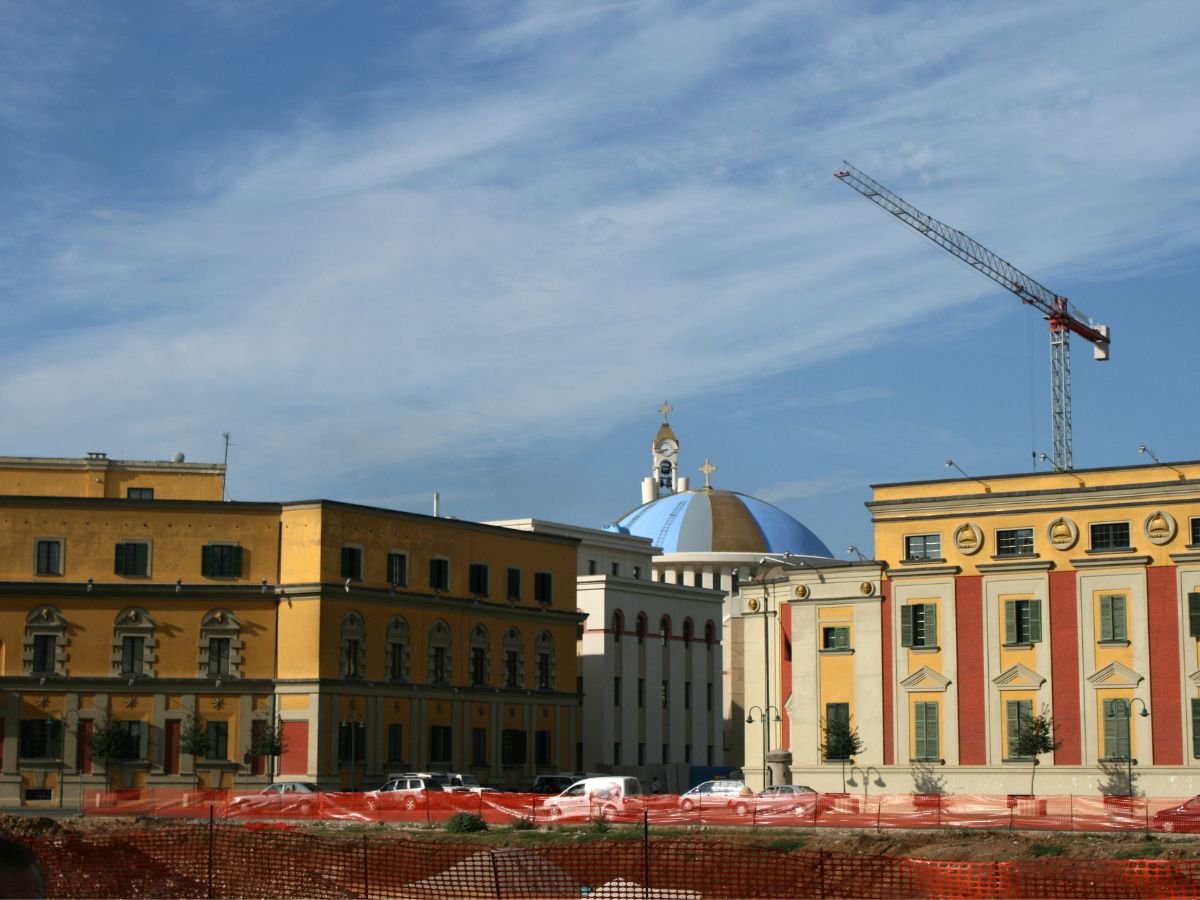
The last affordable coast in Europe and why the window to claim it is narrower than most people realize.
Somewhere between the moment a country becomes discoverable and the moment it becomes expensive, there is a window. For most places, that window is short and easy to miss. Portugal had about five years. Montenegro had about three. Croatia had maybe eighteen months after joining Schengen before prices reset to a new baseline. Some countries never have a window at all they go from obscure to expensive without anyone noticing the middle.
Albania is inside its window right now. It is discoverable. Property prices climbed eighteen percent year-over-year through early 2026. Tourism arrivals hit nearly twelve million in 2024, against a population of two and a half million. International hotel brands have moved in. Marriott opened in Tirana. Hyatt is building. A new international airport opened at Vlora. Another is expected at Saranda by 2027.
It is not yet expensive. An apartment in central Tirana’s best neighborhood runs around €900 a month. A coastal apartment in Vlora costs €1,000 to €1,800 per square meter to buy. The total cost of living for a single expat in Tirana is between $1,000 and $1,500 per month, inclusive of rent.
But the closing mechanism is already in motion, and it is not slow. Albania opened twenty-four of thirty-three EU accession chapters in the seven months between October 2024 and May 2025. The Prime Minister has publicly targeted closing negotiations by 2027 and full EU membership by 2030. French President Macron, after the 2025 Albanian elections, suggested Albania could join “in two years to come.” Even if these timelines slip and most analysts think they will the direction is set, and the trajectory tends to compress prices upward before membership arrives. Other accession countries saw property values rise thirty to fifty percent in the years immediately preceding entry.
This is the kind of window Portugal had in 2012. It lasts until it doesn’t.
The thesis
Albania is the country most Americans know nothing about and most Europeans know only as the place their grandparents warned them about. It emerged from forty-five years of communism in 1991 poorer than any country in Europe. It then spent three decades quietly rebuilding slowly in the 1990s and early 2000s, then much faster through the 2010s as the judicial system reformed, infrastructure modernized, and the tourism industry began to understand what it had.
What it has: three hundred eighty kilometers of Adriatic and Ionian coastline, a Mediterranean climate, architecture that ranges from Roman to Ottoman to brutalist Hoxha-era to modernist Tirana, a cuisine that most people sampling it for the first time describe as “like Italian food but more generous,” and a cost of living that currently sits at roughly forty percent of France and twenty-five percent of the United States.
It also has the single most generous visa policy in Europe. Americans get one full year to live in Albania visa-free. Every time. Not ninety days. A full year, renewable by exit and re-entry. The deal is formalized in a 2022 diplomatic arrangement between the Albanian and U.S. governments Decision of the Council of Ministers No. 124/2022 and nothing like it exists elsewhere on the continent.
For EU citizens, the deal is even better: unrestricted freedom of movement under reciprocal agreements, meaning a Berlin-based freelancer can live in Tirana indefinitely with nothing more than a passport and a local police registration within five days of arrival.
This is not a promotional description. It is a legal framework. And it is precisely the framework that EU membership, when it arrives, will replace.
What the window actually is
The post-2022 Albanian playbook looks like this. You fly to Tirana. You walk through passport control. If you are American, the officer records an electronic border entry for a twelve-month stay no stamp, no paperwork, no fees. You then have one year to do whatever you want in Albania: live, work remotely, buy property, rent an apartment, register a business, open a bank account. None of it requires applying for anything in advance.
Before the twelve months run out, you have two choices. Leave for ninety days outside the country, then re-enter to reset the clock. Or apply for a proper Albanian residence permit to stay longer.
The residence permit options, under Law 79/2021 as amended by Law 43/2025 in March 2026, include:
The remote worker permit (Albania’s unofficial digital nomad visa). Requires proof of employment by a foreign company or self-employment with foreign clients, plus either monthly foreign income of at least 32,000 ALL (roughly $385) or a lump deposit of 300,000 ALL (roughly $3,600) held in an Albanian bank for the duration of the permit. Costs €200 to €250. Valid one year, renewable up to five times for a six-year total.
The investor residence permit, available to those establishing or investing in an Albanian business.
The retirement permit, available to those with documented retirement income.
The property-owner residence permit, for those who have purchased real estate in Albania.
The family reunification permit, for spouses and dependents of Albanian residents or citizens.
All of these culminate, after five consecutive years of legal residence with stable activity or relationships in the country, in permanent residency. After five years of permanent residency ten years total from first arrival naturalization becomes available, provided you can demonstrate basic Albanian language proficiency, clean criminal record, and genuine integration.
Marriage to an Albanian citizen compresses this dramatically. Three years of marriage plus one year of legal residence in Albania gives you immediate citizenship eligibility with the language requirement waived. This is the fastest citizenship path in the country and, for a publication with readers who may eventually form binational relationships during their time there, worth knowing exists.
The closing window, specifically
When Albania joins the EU whether that is 2030 as the government hopes, or 2033 as most honest analysts project, or later three things change at once.
The one-year visa-free deal for Americans almost certainly ends. Albania’s U.S. arrangement exists bilaterally, outside the EU framework. Once inside the EU, Albania’s visa policy must align with Schengen standards, which means ninety days for Americans in any one-hundred-eighty-day period, just like France and Italy. The generous window closes.
Property prices restructure. Every EU accession in history has been accompanied by a property revaluation as European buyers recalculate risk and opportunity. Croatia saw roughly forty percent appreciation in the years around its 2013 accession. Albania, starting from a much lower base, is likely to see more. Estimates in the Albanian property press range from thirty to sixty percent cumulative appreciation in the five years leading up to membership. Some of this has already happened. Some has not.
Labor and capital flows reprice. Salaries rise, eventually toward European norms. The arbitrage between “live in Tirana, earn in euros from a German employer” compresses as that German employer begins to expect to pay Albanian employees on a more Europe-adjacent scale.
None of this is a reason to panic. Albania will not close tomorrow. But the window that exists today the specific combination of one-year visa-free, sub-€1,000 rents in the capital’s best neighborhoods, Ionian coastline at Adriatic-resort prices, and a growth trajectory that is unambiguously up is a 2026-to-roughly-2029 story, not a 2030-plus story.
What it actually costs to live there
Tirana is the most expensive city in Albania and still among the most affordable capitals in Europe.
A furnished two-bedroom apartment in Blloku Tirana’s densest, most walkable, most expat-populated neighborhood runs about 90,000 ALL per month, roughly €900 or $970. Komuna e Parisit, the upscale alternative for those who want a quieter, leafier setting with good access to the center, is about 85,000 ALL. One-bedroom apartments in either neighborhood run €500 to €700. Outside the prime zones Myslym Shyri, Don Bosko, Tirana e Re the same apartment costs thirty to forty percent less.
A single person living comfortably in Tirana should budget roughly $1,000 to $1,500 per month all-in. Groceries for a single expat run about $150 to $200 per month; restaurant meals $5 to $15 depending on whether you’re eating traditional Albanian food in a working-class neighborhood or international cuisine in Blloku. Fast gigabit internet costs around $22 per month.
The coastal cities are more variable. Vlora averages about $660 per month for a single expat, but summer rental rates can be triple off-season prices because of the tourism swing. Saranda, the more famous of the two, averages around $890 monthly and has seen the steepest price growth twenty-five to fifty-eight percent year-over-year in 2025 in the most sought-after waterfront locations. Dhermi and Himare, the still-undeveloped stretches between Vlora and Saranda, remain the most undervalued areas on the Ionian coast, and the ones most likely to see the sharpest appreciation as the new Saranda airport comes online in 2027.
For a sense of the property buy-in: apartments in central Tirana’s Blloku now command over €3,000 per square meter. Saranda and Vlora run €1,000 to €1,800 per square meter for standard apartments, higher for seafront. A two-bedroom apartment in a respectable Tirana neighborhood can still be found in the €90,000 to €150,000 range. Rental yields in Tirana run five to eight percent; coastal short-term rental yields reach ten percent in good seasons.
Taxes and the Albanian resident question
Albania is not a tax haven. This is worth naming directly because the relocation press occasionally frames it as one, and it isn’t.
Albanian tax residents anyone spending more than 183 days per year in the country, or whose center of vital interests is in Albania are liable for Albanian personal income tax on worldwide income. Rates are progressive, starting at zero on annual income up to 600,000 ALL (about $7,200) and rising through brackets that reach 23 percent on income above 2,040,000 ALL annually (about $25,000). Self-employment income is taxed at 15 percent. Dividends and interest at 8 percent. Capital gains on real estate held over two years receive favorable treatment.
The math for a reader of this publication typically works like this. If you spend less than 183 days in Albania per year and maintain genuine tax residence elsewhere, Albania does not tax your foreign income. You pay where you actually live most of the time. If you spend more than 183 days, Albania becomes your tax residence and claims worldwide income, mitigated by double-taxation treaties Albania has them with most EU countries and many others, though notably not with the United States.
For Americans, this matters specifically. U.S. citizens are taxed on worldwide income regardless of where they live, and there is no U.S.-Albania double taxation treaty. This means an American who becomes tax resident in Albania owes Albanian tax and U.S. tax, with the foreign tax credit mechanism as partial relief. The mechanics are navigable but require professional planning. Do not assume the simplicity of the visa situation translates into simplicity of the tax situation.
Europeans without a treaty issue often find Albania’s progressive rates, which top out at 23 percent, quite reasonable. Not a haven. But not punishing.
Who Albania is not for
A few honest disqualifications.
Anyone expecting EU-level infrastructure right now. Albanian public healthcare is underfunded and most expats avoid it except for emergencies. Private clinics in Tirana are adequate but not world-class. For serious medical care, expats often travel to Istanbul, Thessaloniki, or home. Rail service is effectively nonexistent. The roads are improving but still patchy in mountainous areas. The air quality in Tirana is poor, particularly in winter. This is a country on its way up, not one that has already arrived.
Anyone who needs a strong passport at the end of the process. Albanian citizenship, after ten years of residency or one year of marriage, grants access to Schengen area visa-free travel once Albania joins the EU but offers limited global mobility before then. Compared to naturalizing in Portugal (five years, strong EU passport immediately) or Malta (the fastest EU investor route), Albania is a weaker mobility play. Its appeal is the life you live there, not the passport you hold at the end.
Anyone uncomfortable with a cash-heavy economy. Albania is modernizing fast, but it remains predominantly a cash economy outside major hotels and modern retail. Credit card acceptance is patchy. ATMs are common in cities, less so in smaller towns and coastal villages. Budget for this.
Anyone in a same-sex partnership who needs full legal recognition. Albania does not recognize same-sex marriage and does not issue family residence permits to same-sex couples. Individual registrations are available, but the legal and practical realities for LGBTQ+ expats are more complicated here than in the EU. This is likely to change on the EU accession path, but it has not yet.
Anyone uncomfortable with the legal and regulatory messiness that comes with a developing country. Property title disputes are a real risk many properties have unclear documentation dating to the communist era, partially-permitted construction is common, and due diligence before purchase requires a competent Albanian lawyer. The judicial system is reforming but still slow. Things work. They just work in a less codified way than in Germany.
Who Albania is very much for
The founder, freelancer, or remote worker earning foreign income who wants to spend a few years in a stunning, underpriced, geographically and culturally rich country before the window closes. The American who wants EU-proximate living without needing a specific visa classification every time they turn around. The couple planning a slow move toward European citizenship who want the best possible year-one landing pad. The retiree whose pension stretches four times further than it does in France. The writer, the artist, the researcher, the person building something small and meaningful whose financial needs are modest and whose curiosity is high.
These are not hypothetical readers. They are the people who have quietly been moving to Tirana, Vlora, and Saranda in growing numbers since the visa-free deal took effect in 2022. The expat population is young, diverse, and increasingly organized there are now coworking spaces in Tirana that would not look out of place in Lisbon, and a foreign community in Saranda that sustains its own book clubs, supper clubs, and weekly meetups.
What happens next
This is the third entry in the Building Elsewhere dossier series, after Uruguay and Georgia. Over the coming months, the Albania dossier will expand into more focused essays: a detailed breakdown of the remote worker permit versus the property-owner permit versus the simpler visa-run approach; a neighborhood-by-neighborhood guide to Tirana for long-term residents; a serious piece on the Ionian coast and where value still exists between Vlora and Saranda; a practical comparison of Albania versus Montenegro for the Adriatic-facing reader; and a U.S.-specific piece on how Americans can manage the no-treaty tax situation honestly.
Field Notes will track EU accession progress as it develops. Each cluster closure is a material event for this dossier, and each one will be reported here with the specific implications for someone considering the move.
For now, the thesis is this.
Albania in 2026 is in the narrowest window of its post-communist history. The visa deal is the most generous in Europe. The coast is the best remaining value on the Mediterranean. The property market is appreciating quickly but still within reach. The EU membership trajectory will change everything when it arrives, and it will arrive but the window before arrival is still open.
For the reader of this publication, the window is the product. Whether to act on it is a personal question. Whether the window is real is not. It is, and it is closing.
Sources
Every specific claim in this piece is sourced from primary documentation or professional tax and immigration coverage of current Albanian law.
- Law 79/2021 “On Foreigners,” as amended by Law 43/2025: primary Albanian immigration law; amendments effective March 2026.
- Decision of the Council of Ministers No. 124/2022: the bilateral arrangement establishing the one-year visa-free stay for U.S. citizens.
- U.S. Department of State, Albania International Travel Information: official confirmation of the one-year visa-free stay.
- Law 113/2020 “On Citizenship,” as amended by Law 77/2023: the current naturalization framework, including the 5-year permanent residency and 10-year total timeline.
- EU accession status and chapter-opening pace: European Commission enlargement progress reports, 2024 and 2025; European Western Balkans analysis, December 2025; Friends of Europe Albania briefings, June 2025.
- Albanian tax resident rules, 183-day threshold, and worldwide income principles: Albanian General Directorate of Taxation; Vardanyan & Partners residency and citizenship guide, March 2026.
- Remote worker permit income thresholds: Law 79/2021 implementing regulations; Citizen Remote Albania digital nomad guide, February 2026.
- Property price and rental data: Bank of Albania Financial Stability Report; INSTAT; Investropa Albania market analysis, early 2026; Consul House Price Index, March 2026.
- Cost of living figures: Numbeo Tirana, March 2026; Expatistan Albania country report, April 2026.
A note on methodology: Albanian law has been amended repeatedly in the 2022-2026 window as the country aligns with EU standards. This piece reflects the law as of March 2026. Pre-2022 articles describing Albanian residency as requiring standard 90-day tourist entry, or describing citizenship timelines without the 2023 amendments, are outdated.