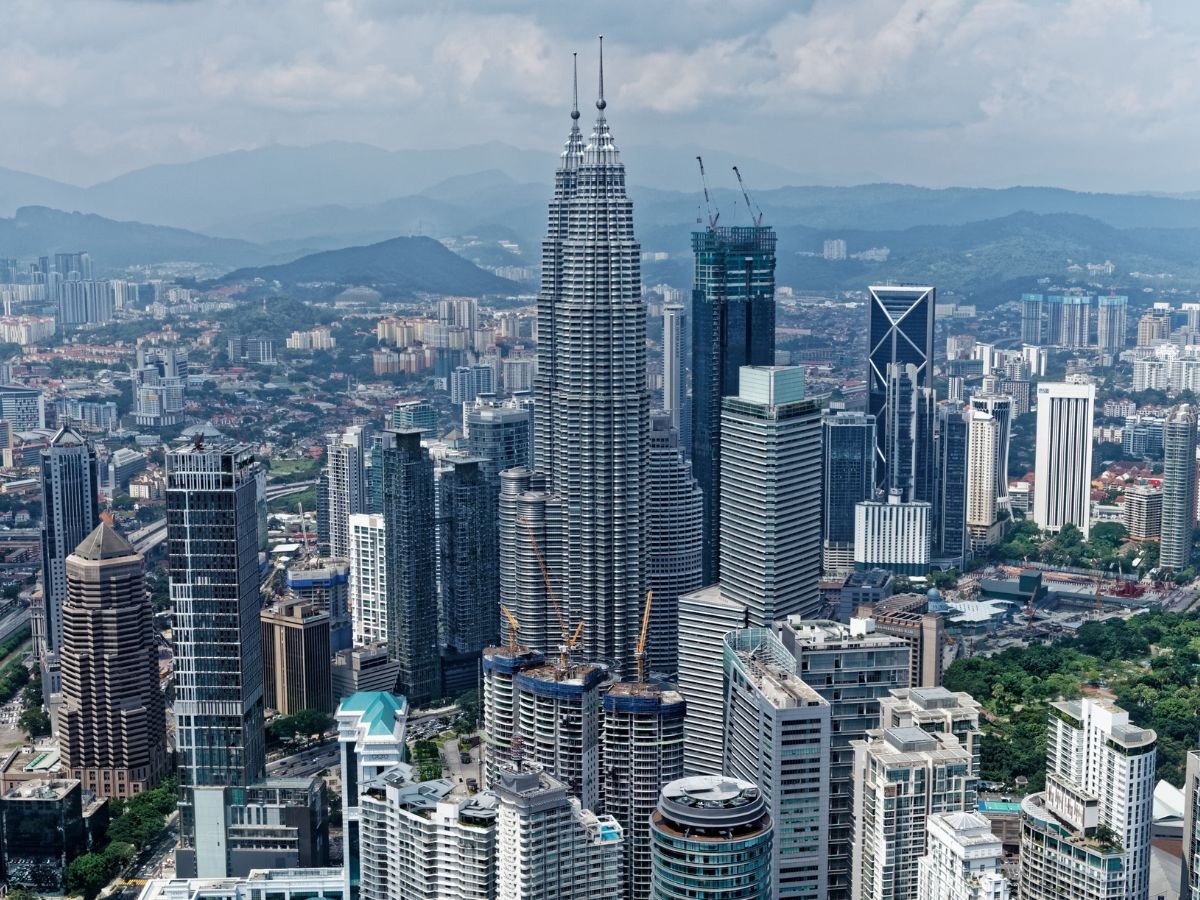
The Southeast Asian base where the headline visa got harder and the quieter visa got better and why most coverage misses the second story entirely.
For most of the past twenty years, Malaysia’s pitch to foreigners wanting a Southeast Asian base could be summarized in four letters: MM2H. The Malaysia My Second Home program, launched in 2002, offered a ten-year renewable residency to anyone who could show a modest income and park a modest deposit in a Malaysian bank. Retirees from Japan, the UK, Australia, and Singapore signed up in droves. At its peak, more than forty thousand people held MM2H visas. The program was, by the standards of retirement residencies worldwide, astonishingly cheap.
Then, in 2020, the Malaysian government suspended MM2H without warning. When it relaunched in 2021, and then again in 2024, and then again in 2026, the requirements had roughly tripled. Deposits that used to be RM 150,000 now required USD 150,000. Property purchases, which used to be optional, became mandatory. The old playbook was dead.
Most of the coverage you will read about moving to Malaysia is still written around the old playbook. It is wrong. The MM2H program that exists today is a different product aimed at a different customer, and approaching it with the old assumptions will frustrate you at best and bankrupt you at worst.
But while everyone has been writing about MM2H’s decline, Malaysia has quietly built something else: the DE Rantau digital nomad visa, launched in late 2022 and still largely unknown outside the remote-work community. Combined with Malaysia’s territorial tax system and a foreign-income exemption that runs through December 31, 2026, it creates a window that most guides describing Malaysia as “too expensive now” don’t even mention.
This dossier covers both stories. The first is the one most people are asking about. The second is the one most people should be.
The thesis
Malaysia is the Southeast Asian country that nobody talks about at dinner parties. Bangkok gets the digital-nomad mythology. Bali gets the Instagram. Singapore gets the finance jobs. Vietnam gets the food-and-cheap narrative. Malaysia, somehow, does not get a narrative at all.
The countries that have narratives are usually the countries people have already decided are desirable. Malaysia does not have one, which means Malaysia does not have to deal with the bidding war that comes with one. Penang’s old city is a UNESCO World Heritage site with some of the best street food on earth, and a two-bedroom condo in Georgetown rents for less than you would pay for a studio in Chiang Mai. Kuala Lumpur has a private healthcare system better than what most Americans can access at home, at a tenth of the cost. English is widely spoken a legacy of British colonial administration and of Malaysia’s unusually high rate of Western-educated professionals returning home. Internet speeds are excellent. The political system is democratic and reasonably stable. The visa infrastructure, despite the MM2H changes, is well-documented and legal.
None of this is a secret. It just hasn’t been packaged into the kind of story the relocation-content industry knows how to tell. Malaysia is the country for readers who care more about what a place is actually like than about how that place photographs.
What actually happened to MM2H
The full reform timeline matters because the internet is still littered with articles describing the pre-2021 program as if it existed. Here is the current state.
The program was suspended in August 2020, partially reopened with higher requirements in 2021, and fully restructured under the Ministry of Tourism, Arts and Culture (MOTAC) in July 2024. A fourth tier specifically for Special Economic Zones was added in early 2026. All current applicants are evaluated against the July 2024 framework as amended in 2026.
The current MM2H structure has four tiers:
Silver tier: 5-year renewable visa. USD 150,000 fixed deposit. Minimum property purchase of RM 600,000 (roughly USD 140,000 at current rates). Applicants under 50 must spend 90 days per year in Malaysia; applicants 50 and older have no minimum stay.
Gold tier: 15-year renewable visa. USD 500,000 fixed deposit. Minimum property purchase of RM 1,000,000.
Platinum tier: 20-year renewable visa. USD 1,000,000 fixed deposit. Minimum property purchase of RM 2,000,000. Includes work rights and business operation rights.
SEZ (Special Economic Zone) tier: 10-year renewable visa, currently applicable only to Forest City in Johor. Fixed deposit of USD 65,000 (under 50) or USD 32,000 (50 and older). Minimum property purchase of RM 500,000 in the zone. The SEZ tier was designed to move unsold inventory in Forest City, a troubled Chinese-developed waterfront district across the strait from Singapore.
Three things about the current structure that most coverage buries:
Property purchase is mandatory for all tiers, not optional. The property cannot be sold for ten years without forfeiting the visa. You can rent it out, but you cannot exit the investment. This is a ten-year capital commitment on top of the fixed deposit, not an alternative to it.
The fixed deposit must be maintained throughout the visa’s life. You can withdraw up to 50% of it from the second year onward for approved expenses (property purchase, education, healthcare), but the remaining 50% must stay locked. The visa ends when the deposit does.
Applications must go through a licensed MM2H agent. Direct applications are not permitted. Agent fees run RM 40,000 to RM 70,000 depending on tier, on top of the government participation fees and professional fees for lawyers and medical exams.
For a Silver-tier applicant doing the math honestly, the five-year all-in cost of MM2H is roughly USD 200,000 to USD 250,000 in locked-up capital (fixed deposit plus property), plus USD 10,000 to USD 15,000 in one-time fees, plus mandatory health insurance (RM 80,000 minimum coverage required) at roughly USD 1,000 to USD 3,000 per year.
For retirees with substantial pensions and liquid assets who specifically want Malaysia — for the food, the healthcare, the English environment, or family connections in Singapore MM2H still makes sense. For anyone doing the old “I’ll retire to Penang cheaply” calculation, it no longer exists.
The quieter visa that works better for most readers
Here is the story most coverage leaves out.
In late 2022, the Malaysia Digital Economy Corporation (MDEC) launched DE Rantau, a dedicated digital nomad visa for remote workers. The requirements are dramatically lower than MM2H and aimed at an entirely different applicant.
DE Rantau grants a renewable one-year pass. Income requirements are straightforward: USD 24,000 per year for tech workers (software developers, IT, data roles) or USD 60,000 per year for non-tech remote workers. Applications go directly through MDEC’s online portal without needing an agent. No fixed deposit. No property purchase. The designated hubs for DE Rantau participants include Kuala Lumpur, Penang, Langkawi, and several other regions, all of which offer subsidized coworking and community infrastructure for visa holders.
For a solo founder, consultant, remote employee, or freelance professional, DE Rantau delivers most of what people actually want from MM2H a legal basis to live in Malaysia for an extended period — at roughly one percent of the cost.
The visa has two important limitations worth naming.
It does not lead directly to permanent residency. It is a work-authorization visa, renewable once for a total of two years. After that, you either move to MM2H, leave, or navigate other employment-based pathways.
Malaysian tax residency triggers at 182 days of physical presence in a calendar year. Once you cross that threshold, you become liable for Malaysian personal income tax on Malaysian-source income and, historically, on any foreign-source income remitted into Malaysia. This matters for DE Rantau holders specifically because most participants stay the full year and hit the threshold by default.
Which brings us to the second reason 2026 matters for Malaysia.
The foreign-income exemption window
From January 1, 2022 through December 31, 2026, Malaysia has a conditional exemption in place: foreign-sourced income received by Malaysian tax residents is exempt from Malaysian income tax, provided the income has already been taxed in the source jurisdiction. This exemption, enacted to smooth Malaysia’s transition away from a purely territorial system, is scheduled to end on December 31, 2026.
For the right profile, this creates a narrow window. A remote worker who establishes Malaysian tax residency in 2026, earning foreign-sourced income that is already taxed in their home country, pays effectively zero Malaysian tax on that income this year. What happens after December 31, 2026, depends on whether the Malaysian government extends the exemption as it has done twice before — or lets it expire. Both outcomes are possible. The historical pattern suggests extension is more likely, but nobody should plan on it.
Even without the exemption, Malaysian personal income tax for residents is progressive up to 30%, with the 30% rate only kicking in on income above RM 2,000,000 per year (roughly USD 465,000). For most readers of this publication, the effective rate after legitimate deductions and exemptions falls in the 10% to 24% range broadly comparable to Portugal, Spain, or most of the EU, and significantly lower than the United States.
Non-residents those spending fewer than 182 days in Malaysia in a calendar year are taxed at a flat 30% on Malaysian-source income only, which for most remote workers means zero Malaysian tax liability on their foreign-employer income. This matters for Building Elsewhere readers using Malaysia as a rotation base rather than a primary residence.
What it actually costs to live there
Malaysia is among the cheaper established-infrastructure countries on earth. This is not a comparison to Vietnam or the Philippines; it is a comparison to Portugal, Spain, or Mexico. Malaysia wins most of those comparisons on cost while matching or exceeding them on infrastructure.
Kuala Lumpur: A two-bedroom condo in a central, upscale neighborhood (KLCC, Bangsar, Mont Kiara) rents for RM 2,500 to 5,000 per month, roughly USD 580 to USD 1,160. A one-bedroom in the city center runs about USD 630. A couple living well nice apartment, dining out several times a week, comfortable lifestyle — budgets RM 8,000 to 15,000 per month (USD 1,860 to USD 3,480). A single expat on a more modest trajectory lives well on USD 1,200 to USD 2,000 monthly.
Penang: Consistently the quality-of-life pick over KL for most readers of this publication. A two-bedroom in a modern Georgetown condo runs RM 1,800 to 3,500 per month (USD 420 to USD 810). Monthly costs for a couple living well are RM 6,000 to 12,000 (USD 1,400 to USD 2,800). The city’s food culture is genuinely world-class, the pace is slower than KL, and the long-established British and Australian expat communities mean you are not building a life from scratch. A one-bedroom in central Georgetown rents for about USD 430.
Johor Bahru: The budget option. RM 1,200 to RM 2,000 for a two-bedroom condo. Useful if your actual gravity is Singapore the border crossing at Tuas takes about an hour but the city itself is less developed than KL or Penang. Best for Singapore commuters specifically.
Private healthcare, worth calling out separately: Gleneagles, Sunway Medical Centre, and Prince Court in KL, plus several strong hospitals in Penang, deliver specialist care that matches or exceeds what you can get in the U.S. or U.K. at a fraction of the cost. Specialist consultation: USD 25 to USD 55. MRI: USD 170 to USD 320. Private hospital room: USD 45 to USD 105 per night. Many physicians trained in the U.K., Australia, or the U.S. Medical tourism is a recognized Malaysian industry, which means the hospitals actively compete for international patients and operate at international standards.
Insurance: Mandatory for MM2H holders, strongly recommended for DE Rantau holders. A comprehensive international policy runs USD 1,000 to USD 3,000 per year depending on age and coverage dramatically cheaper than equivalent U.S. coverage.
Who Malaysia is not for
A few honest disqualifications.
Anyone expecting cold weather or strong seasons. Malaysia sits two degrees north of the equator. Temperatures hover around 31°C (88°F) year-round with high humidity. If seasonal change matters to you, this is not your country.
Anyone uncomfortable with conservative Islamic cultural norms in public settings. Malaysia is a moderate, pluralistic Muslim-majority country, and the urban expat bubbles are cosmopolitan. But alcohol is taxed heavily, Ramadan reshapes daily rhythms, and certain public behaviors that are uncontroversial in Thailand or the Philippines are more complicated in Malaysia. This is a soft friction, not a hard block, but it is worth being honest about.
Same-sex couples seeking legal recognition. Malaysia does not recognize same-sex partnerships and has laws that, while rarely enforced against foreigners, criminalize same-sex sexual activity. Same-sex expat couples live in Malaysia, particularly in Penang and KL, but the legal framework offers no protection, and discretion is the practical reality. Be honest with yourself about what this means for you.
Anyone who needs a clear path to citizenship. Malaysia does not grant citizenship through naturalization on timelines comparable to Uruguay, Brazil, or most European countries. Citizenship requires ten years of continuous residency, renouncing prior nationality, passing Malay language proficiency, and is not guaranteed even after all requirements are met. Malaysia is a residency play, not a passport play. Readers specifically optimizing for a second passport should look elsewhere.
Anyone whose budget was calibrated to the pre-2021 MM2H era. If you read a 2019 article saying “you can retire to Malaysia on USD 2,000 a month,” that math no longer supports MM2H-based residency. It still supports a reasonable DE Rantau or non-resident lifestyle, but the retirement-focused pathway specifically has changed.
Anyone uncomfortable with a federal system that includes Sharia family law for Muslims. Sharia applies only to Muslim citizens in family matters; non-Muslim expats and citizens are governed entirely by civil law. But understanding Malaysia’s dual-track legal structure is part of honest due diligence.
Who Malaysia is very much for
The founder or remote professional earning USD 60,000+ who wants a legal, English-friendly Southeast Asian base at a fraction of Bangkok or Singapore costs, and who is comfortable with a one-to-two-year DE Rantau horizon while figuring out longer-term plans.
The retired couple with USD 400,000+ in liquid assets who want to deploy MM2H Silver toward a permanent Southeast Asian base, value world-class healthcare, and are genuinely considering Malaysia rather than comparison-shopping every Asian residency program.
The family with school-age children specifically attracted to Malaysia’s unusually strong international school infrastructure British, American, Australian, and IB curricula all well-represented in both KL and Penang, at roughly one-third the cost of equivalents in Hong Kong or Singapore.
The Singapore-based professional or family looking to reduce cost of living by crossing the causeway for whom SEZ-tier MM2H in Forest City, or rental in Johor Bahru, delivers meaningful savings without giving up career gravity.
What happens next
This is the fourth entry in the Building Elsewhere dossier series, after Uruguay, Georgia, and Albania. Over the coming months, the Malaysia dossier will expand into more focused essays: a deeper breakdown of DE Rantau versus MM2H for different applicant profiles; a neighborhood-by-neighborhood comparison of Kuala Lumpur and Penang for long-term residents; a piece specifically on the December 31, 2026 foreign-income exemption deadline and what extension (or non-extension) would mean; a look at Forest City as both an MM2H-SEZ opportunity and a cautionary tale; and the U.S.-specific tax mechanics for Americans operating in Malaysia under either visa.
Field Notes will track any extension or expiration of the foreign-income exemption as the December deadline approaches. That single decision will meaningfully change the math for anyone considering Malaysian tax residency from 2027 onward, and it will be reported here with primary sources as soon as the government acts.
For now, the thesis is this.
Malaysia is two countries right now. One is a high-end residency destination where the old retirement math no longer works and the new math favors people with substantial capital who are genuinely committed. The other is a remote-worker base with a generous one-year visa, real infrastructure, and a tax window that closes on December 31, 2026. Most coverage of Malaysia acknowledges only the first. Most of what matters for readers of this publication is in the second.
The Southeast Asian country that nobody talks about at dinner parties may be the most genuinely useful option on this list for anyone with a multi-year plan that includes a legal Asian base. It just requires reading past the MM2H headlines to find the real story.
Sources
Every numerical claim in this piece is sourced from primary documentation or professional coverage of current Malaysian law.
- MM2H current structure and tier thresholds: Malaysian Immigration Department (JIM) official MM2H page; Ministry of Tourism, Arts and Culture (MOTAC) program documentation; Hudson McKenzie immigration briefing, April 2026; Wise MM2H guide, January 2026; Alestria Property MM2H 2026 guide.
- MM2H Special Economic Zone tier: Official Forest City SEZ MM2H documentation, July 2025 onward.
- DE Rantau digital nomad visa: Malaysia Digital Economy Corporation (MDEC) official program portal.
- Foreign-income tax exemption through December 31, 2026: HSBC Expat Malaysia Tax Guide; official Inland Revenue Board (LHDN) documentation.
- Tax residency rules and 182-day threshold: LHDN resident status determination; HSBC Malaysia Tax Guide.
- Personal income tax rates and brackets: GlobalPassport Malaysia tax overview, 2025-2026 rates.
- Cost-of-living figures for KL, Penang, and Johor Bahru: Pacific Prime Malaysia cost of living report, January 2026; Rumavi Malaysia relocation analysis, April 2026; StateBay MM2H and cost guide, February 2026.
- Healthcare cost benchmarks: StateBay Malaysia healthcare pricing breakdown, 2026.
A note on methodology: the MM2H program was substantively revised in July 2024 and again in early 2026. Guides published before July 2024 describe a program that no longer exists. This piece reflects the July 2024 structure as amended through Q1 2026.