The Uruguay playbook: an 18 Month Sequence
The planning question isn't which country. It's what to do, and in what order. Uruguay's system rewards the right sequence and penalizes people who don't know what it is.
Essay · Applying the sequencing framework to the country that rewards it most.
Most people approach a country-specific move the way they’d approach a big purchase. They research the product exhaustively read every review, compare every spec and assume that once they’ve decided to buy, the logistics will sort themselves out. They usually don’t. Logistics have an order, and the order matters.
This is particularly true of Uruguay, and for a specific reason. Uruguay’s system contains a sequencing gift that most people don’t notice until someone explains it to them: the citizenship clock starts on the day you arrive to begin your application, not the day your permanent residency is granted. Get the sequence right and you pick up several months of citizenship clock for free, invisibly, while your paperwork works through the system. Get it wrong and you lose those months, sometimes permanently.
That is the first thing this playbook is about. The sequence is the product.
This piece assumes you’ve done the clarity work that Uruguay is genuinely on your shortlist, not just a tab you have open. If you’re still in the earlier decision stage, that’s a different conversation, and Building Elsewhere covers it in the clarity essay that precedes this one. If you want the full Uruguay picture the 2026 Budget Law changes, the tax math, the cost of living breakdown, the citizenship quirks the Uruguay dossier covers all of it. This piece focuses on one thing: what to do, and in what order, over the first eighteen months.
What Uruguay is actually offering in 2026
The short version, because it’s necessary context before the sequence makes sense.
Budget Law 20.446, effective January 1, 2026, rewrote Uruguay’s foreign-resident tax framework. The old route a real estate purchase of roughly $590,000 plus sixty days of annual presence, in exchange for eleven years of tax-free foreign income is gone. The new version has three qualifying paths. The one that matters most for someone genuinely relocating: spend more than 183 days per year in Uruguay, with no investment threshold attached, and you qualify for the same eleven-year holiday on foreign income.
The thesis is this. Uruguay’s reset didn’t close the door on the eleven-year holiday. It redirected the door toward people who are actually going to live there. If you are planning a real move not a mailbox, not a sixty-day tax optimization pass the path is still open and the benefits behind it are among the strongest in the hemisphere. Eleven years of zero Uruguayan tax on foreign dividends, capital gains, rental income, interest, and remote work earnings. After the holiday ends, the rate is 12%, with foreign taxes creditable against it.
Citizenship by naturalization: three years for married couples and families, five years for single applicants. Clock starts on arrival. Passport grants Schengen access and visa-free entry to more than 150 countries.
That’s the product. Now the sequence.
Phase one: Before you leave (months minus three to zero)
The preparation phase has a hard deadline: you cannot usefully start the residency process until you are in Uruguay. Everything before arrival is groundwork. The goal is to arrive with clean documents, a clear financial picture, and a tax consultation already completed, so that nothing slows you down once the clock starts.
Documents. The Dirección Nacional de Migración requires, at minimum: a valid passport, a certified criminal background check from your country of origin (for U.S. citizens, this means an FBI Identity History Summary, which takes three to eight weeks to process and requires apostille certification), and proof of income. For married applicants, a certified marriage certificate. For families with children, birth certificates for each child. All foreign documents require apostille and, if not in Spanish, certified translation.
Start the FBI background check the moment Uruguay becomes serious. It is the longest lead-time item in the document stack and the one most people underestimate. Eight weeks is common. Ten is not unusual. Missing this at arrival delays your filing window and compresses your first-year presence against a tighter deadline.
Financial documentation. Income proof is flexible pension statements, investment account income, remote work contracts, business income documentation. The threshold for residency approval is approximately $1,500 per month for a single applicant and $2,500 for a couple or family. This is a low bar by any serious measure. The important thing is that it be documented consistently: bank statements showing regular deposits, account statements, payroll records, dividend summaries. Inconsistent or informal income freelance earnings from scattered clients, crypto holdings without a paper trail needs to be organized before arrival, not after.
Tax consultation. This is the step most people skip and most regret. If you are a U.S. citizen, Uruguay’s eleven-year tax holiday interacts with your worldwide taxation obligation in ways that require planning before you arrive, not after. The foreign tax credit and the foreign earned income exclusion are not the same thing, and which one applies to which income in which year depends on how your income is structured and what elections you make in what order. Get a consultation with a tax professional who works across both jurisdictions ideally someone with both Uruguayan and U.S. tax experience before you leave. KPMG and PwC both maintain Uruguay practices. Local firms like Guyer & Regules or Ferrere are well-regarded for the Uruguay side. The consultation is not optional if you have any complexity to your income.
The reconnaissance trip. If you haven’t been to Uruguay to live in it not visit, but actually rent an apartment in Pocitos for three weeks and go to the grocery store and sit in a café on a Tuesday morning go before your residency trip. The country is not the brochure. It has winters. The bureaucracy requires Spanish. The expat community is small. The cost of living is real. These are manageable realities; they are not surprises you want to have after you’ve committed. The dossier covers this honestly.
Phase two: Arrival and the first filing (months zero to one)
The clock starts here. This is the most important sentence in this playbook. The day you enter Uruguay to initiate your residency application is the day your citizenship timeline begins not the day your permanent card is issued, not the day you are formally granted tax residency. The day you walk into the country with the intention to file.
This means: do not arrive in Uruguay, spend two weeks looking for an apartment, and then file. File immediately within the first week of arrival, ideally within the first few days. You are not losing time to bureaucratic lag; you are gaining clock while your paperwork processes.
The first appointment. Schedule your initial appointment with the Dirección Nacional de Migración before you arrive. Appointments fill up. The Montevideo office at José Enrique Rodó accepts online scheduling. You want this appointment in your first week.
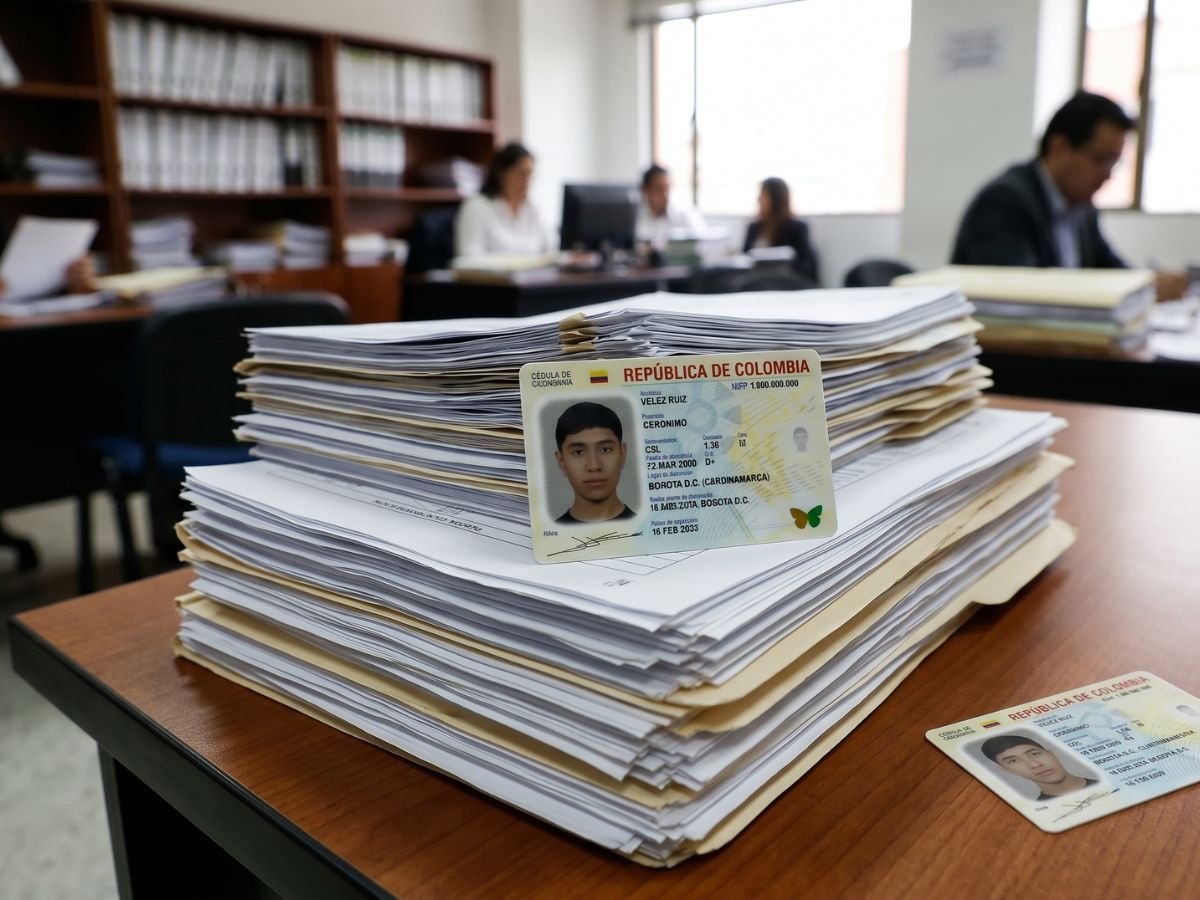
At the appointment, you submit your documents and begin the formal residency process. Within approximately seven days of that first filing, you receive a temporary cédula Uruguay’s national identity card, issued in your name, proving you are a residency applicant in the system. This card is not a formality. It is your access to banking, to the private healthcare system, to the right to remain in the country legally while your permanent application processes.
Banking. Open a bank account once you have the cédula. Banco Santander Uruguay and Scotiabank Uruguay both maintain retail branches with English-speaking staff in Montevideo and are accustomed to new-resident applications. BROU (Banco de la República Oriental del Uruguay) is the state bank and is reliable but slower. Itaú Uruguay is another option. You will need: cédula, passport, income documentation, and proof of address a rental contract or a utility bill in your name works. Getting this done in the first month matters because your proof of address for DGI (Uruguay’s tax authority) registration, which comes next, requires a Uruguayan address.
Phase three: Building the vínculo real (months one to six)
The six months after filing are where most of the practical move happens, and where the 183-day requirement starts to have real stakes.
The 183-day count. Uruguay counts physical presence, not calendar months. 183 days out of a calendar year roughly six months must be spent inside the country to qualify for the tax holiday and to maintain the residency connection the system asks for. Days in and out of the country are tracked at the border. Travel is permitted and normal; the constraint is that you cannot spend more than six consecutive months outside Uruguay without resetting your residency clock. Plan travel accordingly. A rule of thumb: spend more than half of each calendar year in Uruguay, and never be gone longer than four months at a stretch to maintain comfortable margin.
Housing. The rental market in the neighborhoods where most English-speaking newcomers settle Pocitos, Punta Carretas, Buceo, and Carrasco has tightened since 2024. A furnished one-bedroom in Pocitos currently runs $700 to $1,000 per month. Two-bedrooms in the same neighborhoods run $1,000 to $1,400. Unfurnished units are available at lower price points but require furnishing investment upfront. Websites like Gallito and Inmuebles Data list current inventory, though the available stock moves quickly. A local broker is worth the commission for the first lease they negotiate in Spanish, know which landlords are responsive, and can navigate the guarantor requirement that some landlords impose on new residents.
DGI registration and the tax holiday election. The Dirección General Impositiva is Uruguay’s tax authority. To formally establish Uruguayan tax residency and elect the eleven-year holiday, you register with DGI and submit a declaration of income sources. This should be done in your first year, after you have established an address and a bank account, and ideally with the guidance of a local accountant or tax lawyer. The election is not automatic; you have to affirmatively claim it. Guyer & Regules and Ferrere both offer individual tax advisory services. Budget roughly $2,000 to $4,000 for professional guidance through this step, depending on complexity.
Healthcare. Register with a mutualista Uruguay’s hybrid public-private health insurance layer in the first few months. Monthly premiums run approximately $100 to $200 for comprehensive individual coverage, with no deductibles and no lifetime caps. Major options in Montevideo include CASMU, Hospital Español, and Médica Uruguaya. The coverage is genuinely good. Registering early matters because some services have waiting periods for new members.
Spanish. You need conversational Spanish for the naturalization hearing. You also need it for bureaucracy, for the rental negotiation, for the healthcare appointment, for the grocery store argument about the price of oranges. The Rioplatense dialect Argentine-influenced, with distinctive intonation and the voseo conjugation is not the Spanish from your Duolingo app. Start lessons before you arrive. Continue them seriously after. Three years is not as long as it sounds for building genuine conversational fluency from scratch.
Phase four: Permanent residency and the tax holiday (months six to twelve)
Permanent residency is typically granted six to twelve months after your initial filing, provided documents are complete and in order. The permanent cédula replaces your temporary one. It does not change your citizenship clock that has been running since your first arrival date.
Once permanent residency is granted, your legal status in Uruguay is settled. You are no longer an applicant; you are a resident. This is the moment to ensure your DGI registration is properly in place, your tax holiday election is filed, and your income documentation is organized for the first Uruguayan tax year.
If your income is structured correctly and your presence count is above 183 days in this first calendar year, you are now inside the eleven-year holiday window. Foreign dividends, interest, capital gains, rental income from abroad: zero Uruguayan tax, from this year until eleven years from the date of your first tax residency establishment.
Phase five: End of year one, beginning of year two (months twelve to eighteen)
By month eighteen you have completed your first full calendar year of Uruguayan tax residency, your permanent residency is in place, your citizenship clock is running, and your pattern of life in Uruguay is established enough to know whether it is working.
The citizenship math. If you are married and arrived in, say, June of this year: your three-year naturalization eligibility arrives in June of the third year from arrival. The Electoral Court (Corte Electoral) processes naturalization applications, holds a verbal hearing in Spanish with two character witnesses, and issues decisions over roughly twelve months after eligibility. That puts your passport in hand four years after you walked off the plane faster than Portugal’s five, Spain’s ten, or the U.S. green-card track for most categories.
Travel and the six-month rule. In year two, you can begin to travel more freely while maintaining the 183-day count. Many Uruguay residents follow a rough rhythm: six to seven months in Montevideo, one to two months in Brazil or Argentina, one month back to the home country for family, and careful tracking of the total. The six-consecutive-month rule is the binding constraint, not the 183-day count, for most people. Know where you stand and track it.
What to watch. The Orsi government is still finalizing implementing regulations for some provisions of Law 20.446 specifically the structure of the National Innovation Fund pathway and the transparency regime for offshore structures. If your income flows through non-Uruguayan entities, get an updated review of your structure in year two. What was clean under the old regime may require adjustment under the new one. Ferrere and Guyer & Regules both publish client alerts when new guidance drops; follow them.
Who this sequence is for
A genuine relocator someone for whom Uruguay is the destination, not the tax structure finds this sequence clean and manageable. The 183-day requirement is a reasonable ask for someone actually building a life there. The bureaucracy, while slow, is predictable. The income threshold for residency approval is low. The professional services sector in Montevideo is accustomed to foreign residents and well-equipped to handle the filing stack.
Who this sequence does not suit: anyone hoping to maintain their primary life elsewhere while running the Uruguay tax clock. That was the old regime’s gift, and it’s gone. If your business requires you to be in your home country most of the year, or your family situation makes 183 days in Uruguay structurally impossible, this particular path doesn’t work. Look at other structures.
The eighteen months described here are the hardest ones. They are also the ones that determine whether everything that follows the citizenship hearing at year three, the passport at year four, the decade of tax treatment behind it lands cleanly or requires repair work.
The sequence is not complicated. It is just specific, and specificity is what most general relocation advice avoids. Uruguay in 2026 rewards the people who understand the order.
For the full Uruguay picture tax mechanics, neighborhood breakdowns, cost of living by lifestyle, citizenship quirks including the nationality distinction on the passport see the Building Elsewhere Uruguay dossier. For readers still in the decision phase, the clarity essay covers the work that comes before any of this.